Ryan Reynolds brought an entrepreneur’s perspective on creativity. Anna Lembke examined the competition for human attention. David Popovici explored excellence and opportunity beyond sport. Alongside economists, business leaders and policymakers from across Southeast Europe, they shaped a two-day programme about the resources that determine who moves ahead: talent, technology, capital and trust.
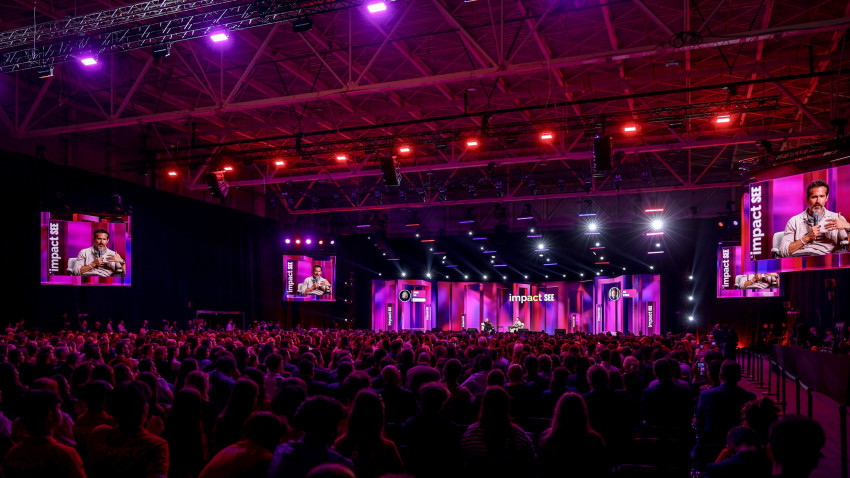
Impact SEE’26, presented by Mastercard, brought nearly 3,000 participants and around 200 speakers to Romexpo Exhibition Center and Face Convention Center on 29–30 September. The third Bucharest edition featured three main stages, eight thematic tracks and Impact Bookstore. Investments & Startups and Culture joined the programme for the first time.
The conversations ranged from the choices behind a successful brand to Europe’s capacity to develop technology and finance growing businesses. Leaders from Mastercard, Banca Transilvania, McLaren Racing, Trendyol and UiPath joined speakers from government, science, sport and culture.
Ryan Reynolds: the business behind the creativity
Ryan Reynolds joined Andreea Esca of PRO TV on the second day for a conversation about entrepreneurship, marking his first official appearance in Romania.
The Hollywood star’s business experience spans Maximum Effort, Aviation Gin and Mint Mobile. Across those ventures, humour, cultural awareness and a distinctive voice have helped turn advertising into something audiences choose to watch. Asked how he knows when a creative idea is ready, Reynolds spoke about the pressure of perfection and the value of making mistakes.
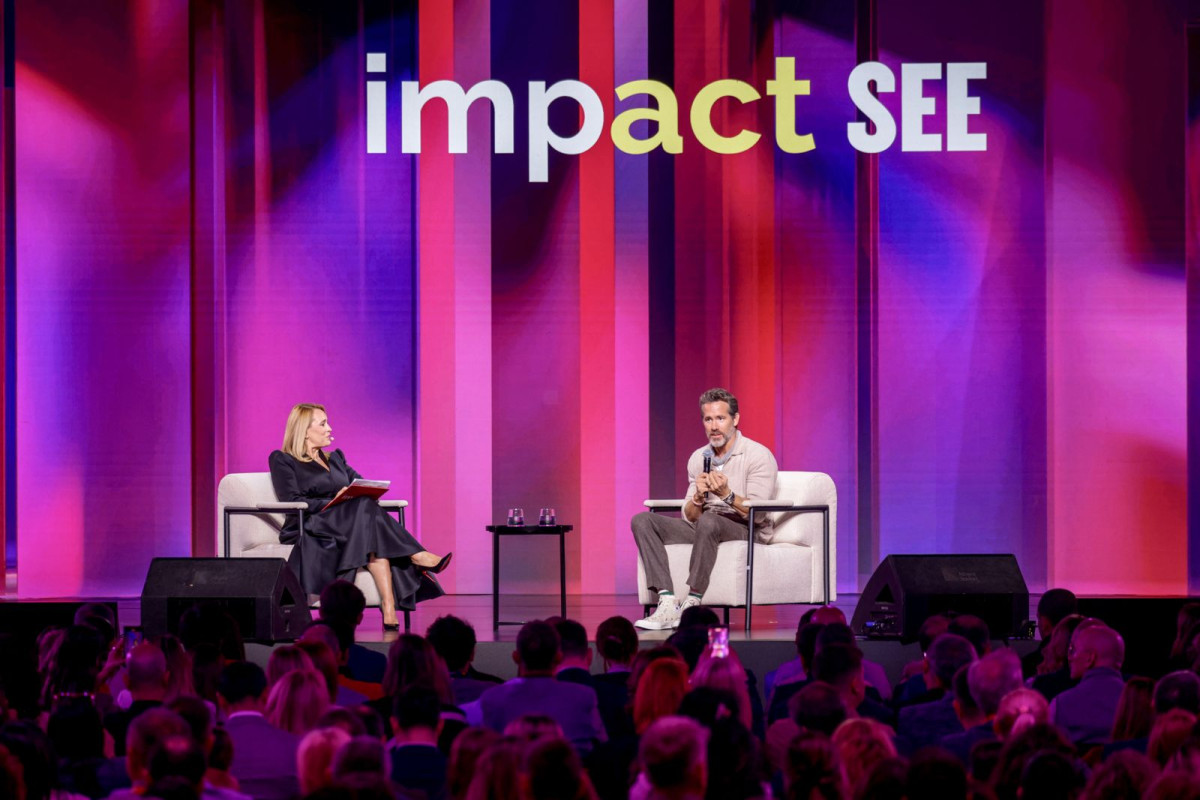
Photo credit: courtesy of Impact
“You can’t manage perfection. Perfection is a disease that I think is afflicting almost everybody in society right now. You have to be willing to be bad at something in order to be good at it. I really believe that. I try to teach my kids that all the time: make mistakes. Mistakes are fertilizer. It’s not whether you’ve made mistakes in life. It’s how you use the mistake,” said Ryan Reynolds.
The relationship between brand and performance also ran through the fireside chat with Louise McEwen, Chief Marketing Officer of McLaren Racing. Moderated by Sergiu Mircea, Executive Director of Marketing, Communication and Customer Experience at Banca Transilvania, “Leadership, Brand and Performance: A Conversation with Lou McEwen” brought the commercial perspective of Formula to Bucharest. The conversation included insights into the power of Mastercard’s partnership with the McLaren Mastercard Formula 1 Team.
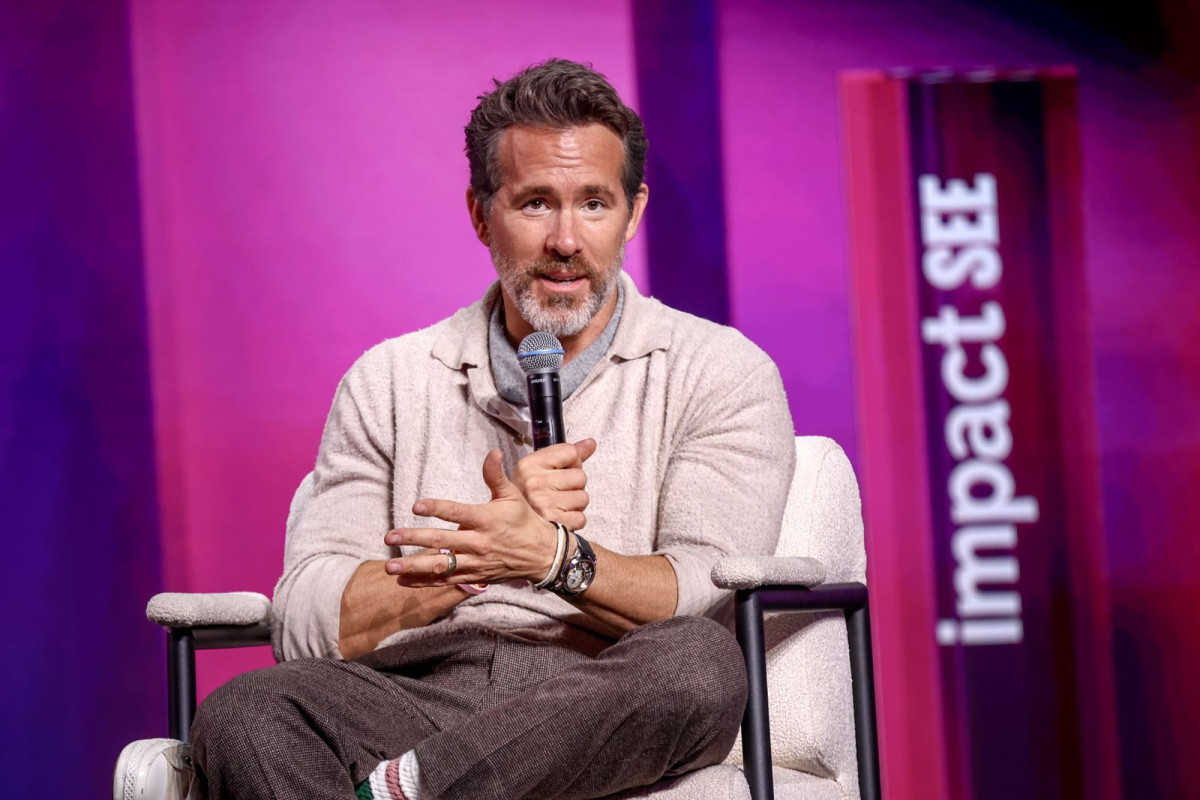
Photo credit: courtesy of Impact
Attention has a human cost
For companies, attention can be the beginning of a customer relationship. For the person giving it, the experience extends beyond a single advertisement, purchase or screen.
Dr Anna Lembke, Stanford psychiatrist and author of Dopamine Nation, examined that human dimension in her keynote on the first day. She then joined Ömer Tetik, CEO of Banca Transilvania; Cosmin Vladimirescu, General Manager for Romania and Croatia at Mastercard; and tennis champion Horia Tecău for “The Dopamine Economy: Leadership, Technology and the Battle for Human Attention”.
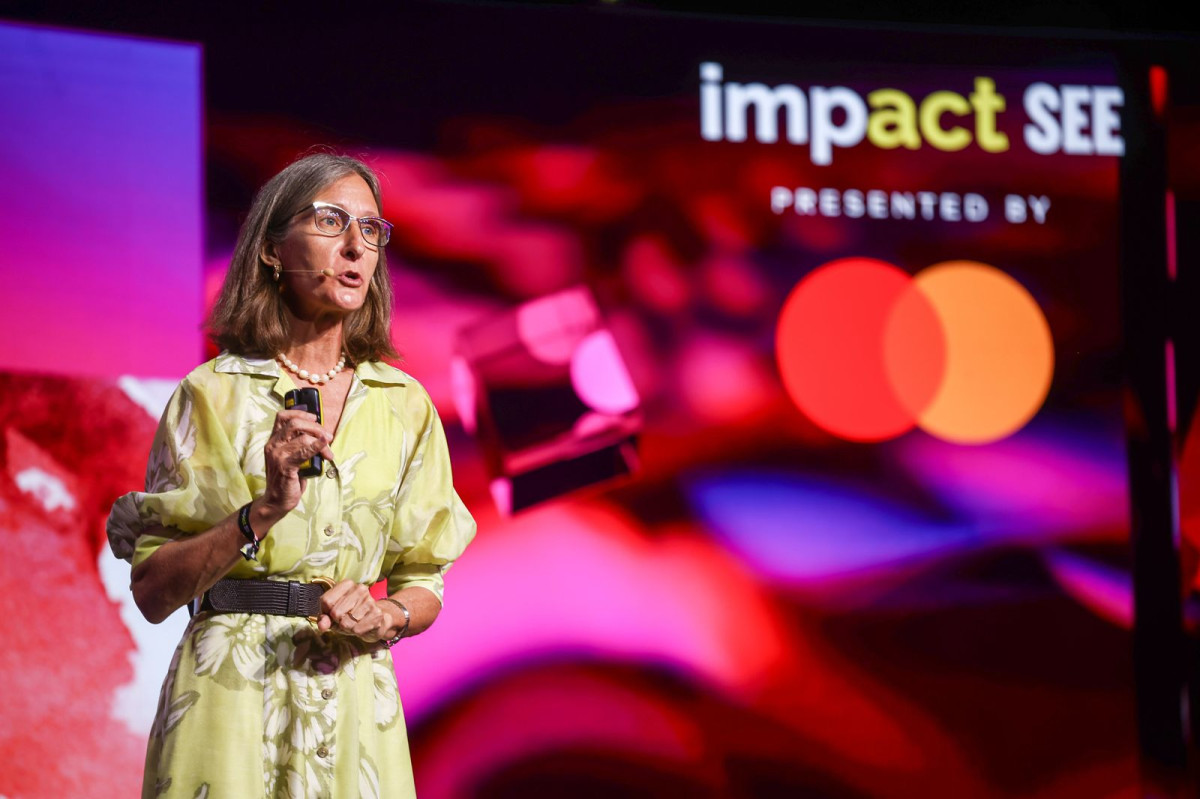
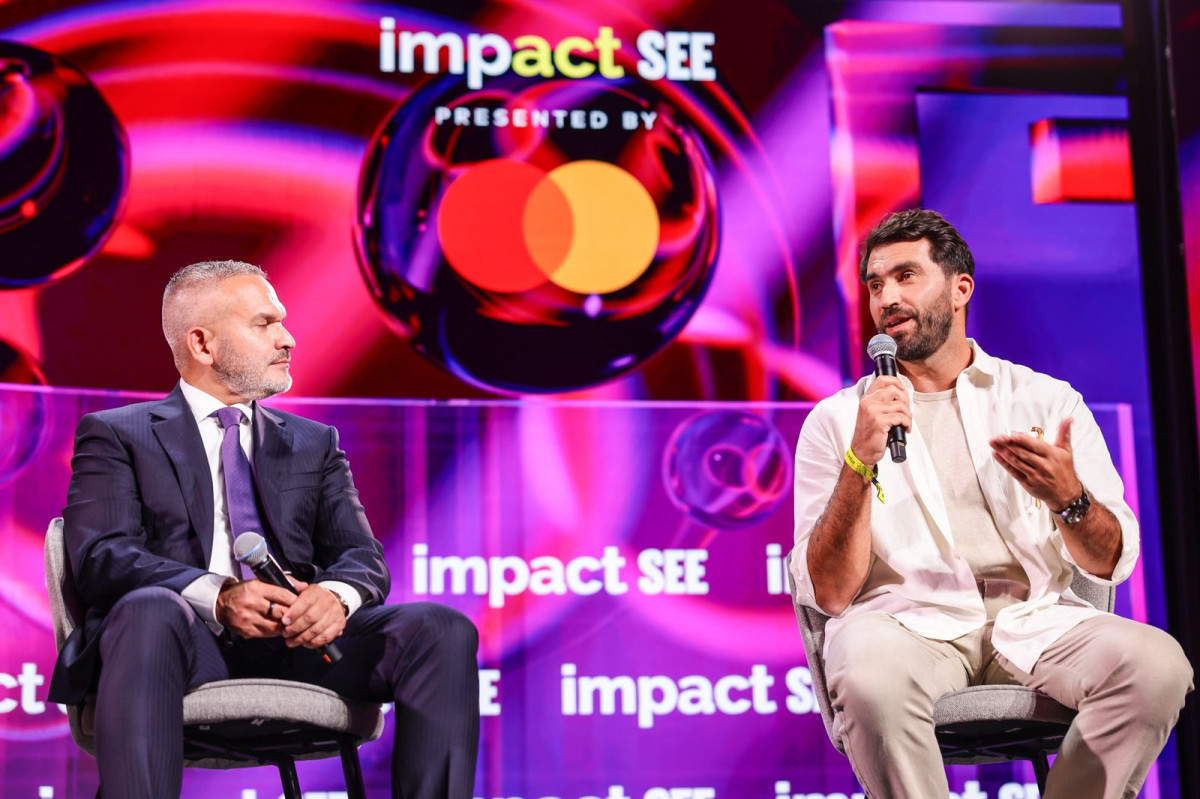
Photo credit: courtesy of Impact
The session connected the study of reward and behaviour with questions facing business leaders: how technology engages people, how digital services shape customer relationships and what responsibility comes with competing for attention.
“More is not better when more means we’re continually trying to escape from reality. I think we need to face and embrace reality: get out from behind our screens, go out into the world, look up at the sky and talk to other human beings. The relentless pursuit of pleasure for its own sake, unfortunately, leads to pain. When we get a notification on our digital devices, we’re probably getting a little bit high, anticipating the reward to come. That drives us to check our phones even when we’ve told ourselves, ‘This time I’m not going to touch my phone. I’m going to pay attention,’” said Dr Anna Lembke.
David Popovici: the conditions for excellence
Developing talent requires both individual commitment and access to opportunity. Olympic swimming champion David Popovici explored that relationship with Raluca Negulescu Balaci, Executive Director of UiPath Foundation, in a conversation moderated by Michael Atalla, Chief Marketing Officer at UiPath.
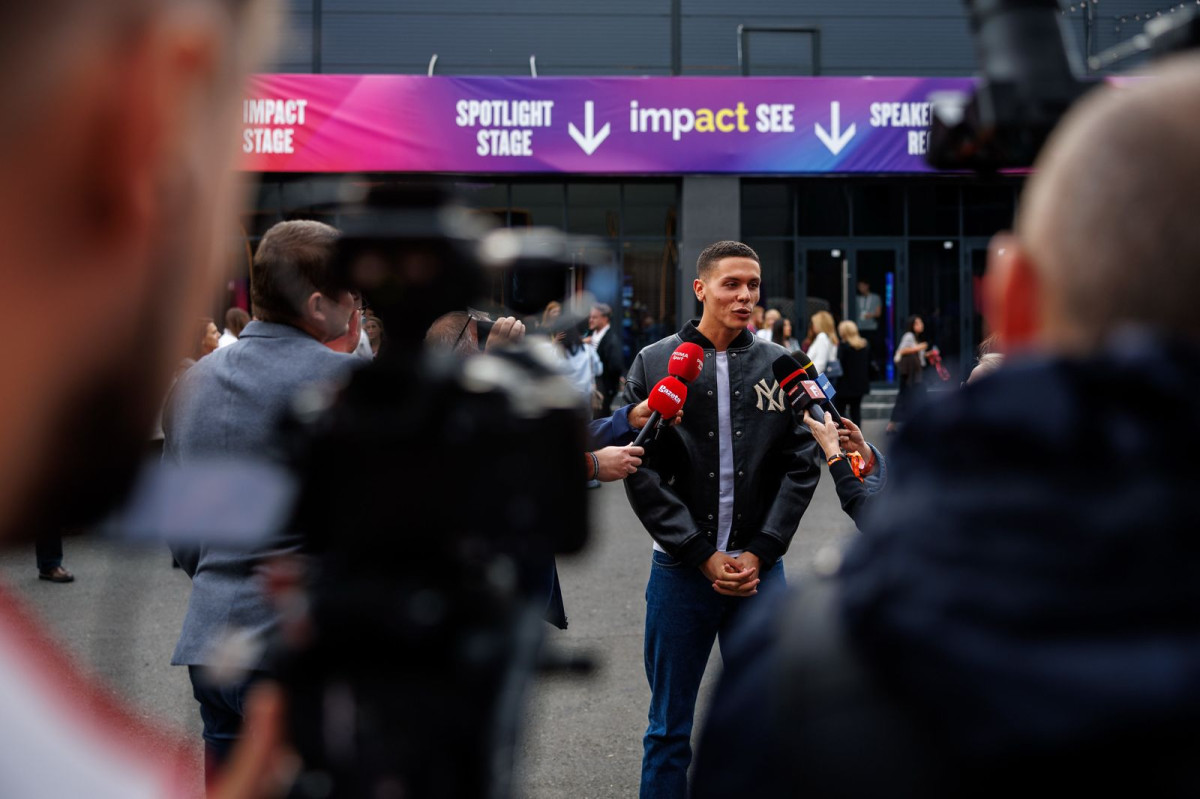
Photo credit: courtesy of Impact
“Where Excellence, Opportunity and AI Shape the Next Generation of Leaders” placed the experience of elite sport alongside the work of expanding educational opportunity. Popovici reflected on rediscovering the joy of swimming after achieving Olympic gold, while Negulescu Balaci described the sustained support children need to discover and develop ambitions of their own.
The wider Leadership programme explored the skills, mindset and moral authority expected of future CEOs, as well as the influence of women’s leadership networks.
The resources behind Europe’s next wave of growth
Europe’s ability to compete provided the opening economic theme. Ilian Mihov, economist and former Dean of INSEAD, examined the continent’s growth prospects, rules and relevance over the next decade before joining Bartosz Ciołkowski, General Manager for Southeast Europe at Mastercard, and Erdem İnan, CEO of Trendyol Group.
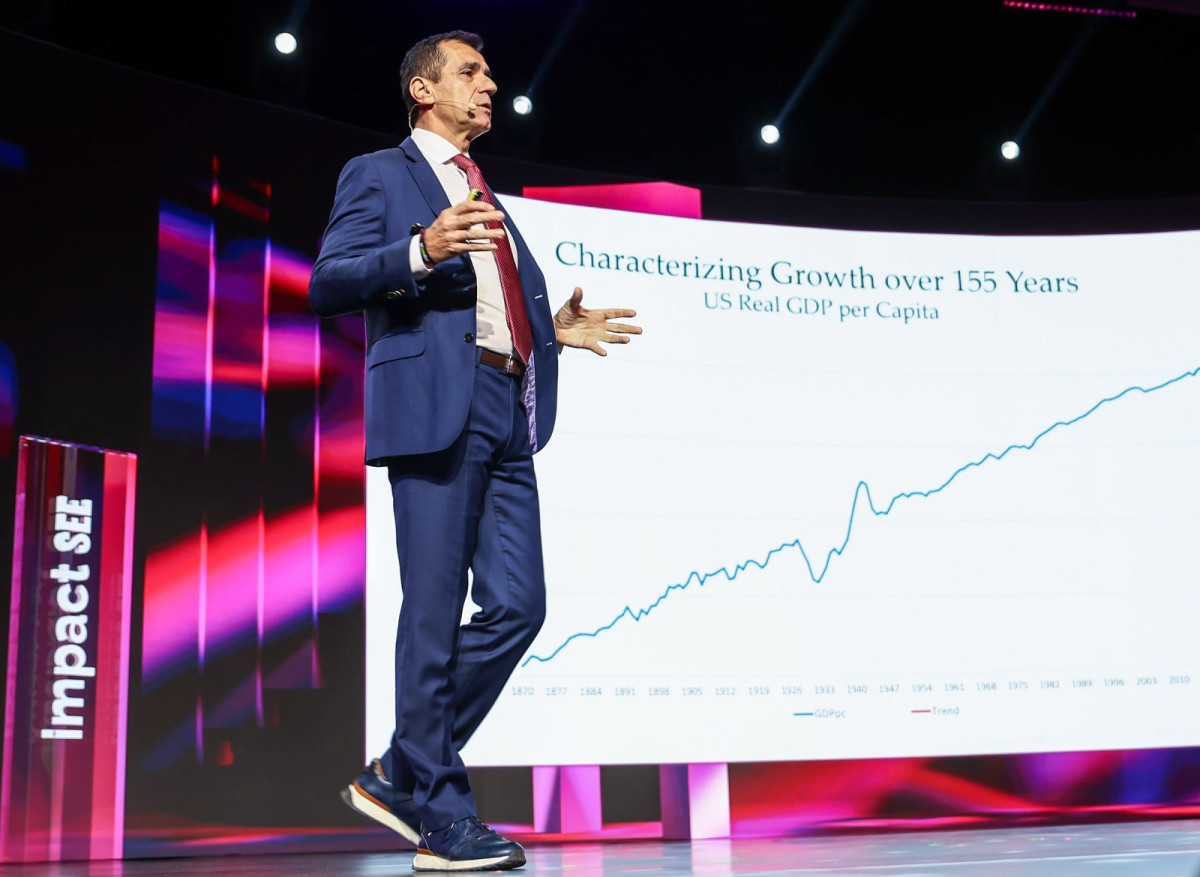
Photo credit: courtesy of Impact
Their discussion, “The New Rules of Competitiveness: Talent, Technology and Capital”, addressed the combination of resources businesses need to expand – and the conditions that determine whether those resources are available.
“In Central and Eastern Europe, the growth potential is there, but we have to grab it. I personally think that Europe has the highest concentration of human capital per square kilometre. The challenge for Europe is not a lack of human capital, but how innovation is organised. Innovation needs funding, but Europe’s stock markets are fragmented and very small. We need to deepen our financial markets so that Europe can finance its own investment,” said Ilian Mihov.
Romania’s Minister of Finance Alexandru Nazare examined how economic ambition can translate into prosperity, while Carlos Mulas-Granados, the IMF’s Regional Representative for Central, Eastern and Southeastern Europe, addressed policies for stability and growth. A regional panel brought together central bank leaders from Moldova and Bosnia and Herzegovina and Albania’s Deputy Minister of Finance to discuss economic convergence and stability.
The link between talent, investment and future growth brought together Ambrozie-Irineu Darău, Romania’s Minister of Economy, Digitalization, Entrepreneurship and Tourism; Michał Baranowski, Undersecretary of State at Poland’s Ministry of Economic Development and Technology; and Arkadiusz Bąk of Polska Grupa Zbrojeniowa.
Security and industrial capacity added another dimension to Europe’s economic prospects. Magdalena Sobkowiak-Czarnecka, Secretary of State at Poland’s Ministry of National Defence, discussed what it takes to keep Europe safe with Aman Dogra of the Financial Times. A separate panel examined industrial sovereignty and who will build Europe’s future, featuring Daniel Ryczek, President of the Management Board of Poland’s Industrial Development Agency (ARP).
AI: from ambition to implementation
Kelly Devine, President of Mastercard Europe, framed her keynote around a direct question: “What Problem Are We Solving?”.
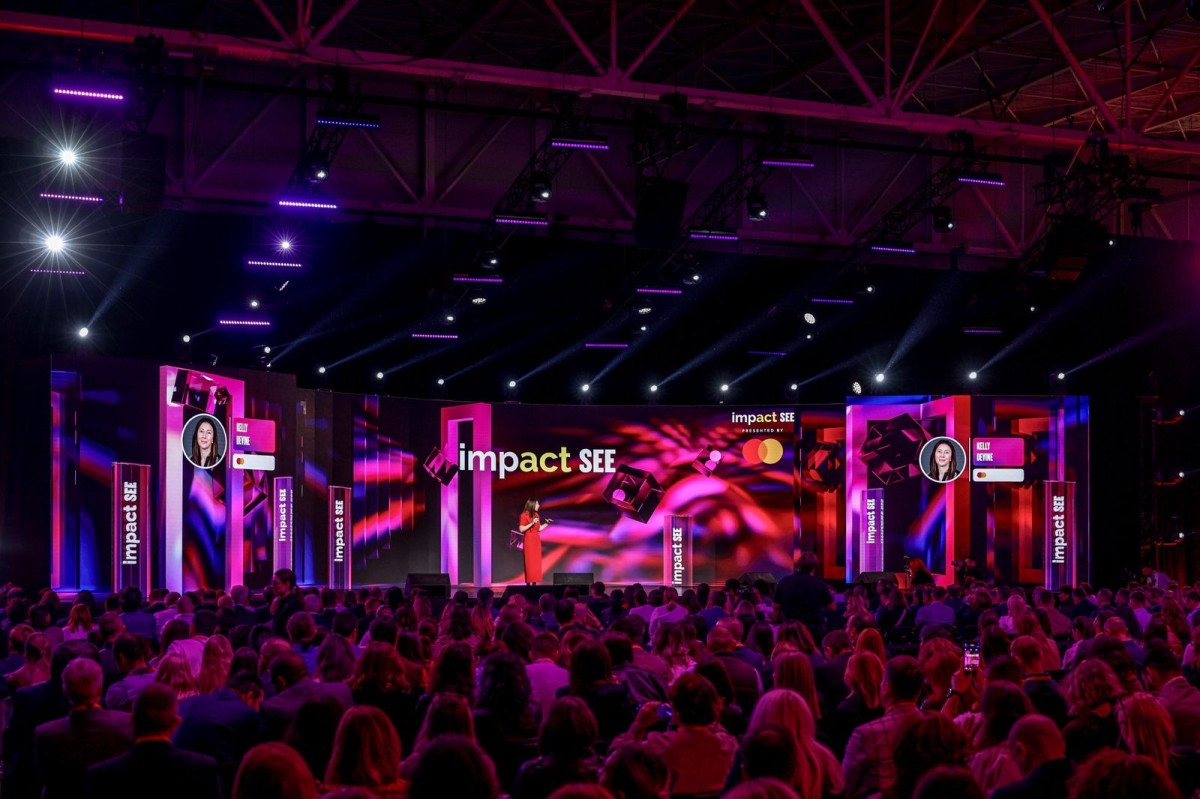
Photo credit: courtesy of Impact
“A system can look very efficient from the top and still feel impossible from the inside. I’m not interested in innovation for innovation’s sake. I judge every innovation by a simple standard: does it make life better? Does it make running a business easier? For me, leadership is about staying close to reality to know what’s actually getting in people’s way, and then using the power that you all have to change that,” said Kelly Devine.
The practical challenge was how to turn AI adoption into business value. Itai Green, Founder and CEO of Innovate Israel, addressed execution within organisations. Victor Negrescu, Vice President of the European Parliament, examined AI’s impact on growth and Europe’s competitiveness, while Barbora Paulovič Deckerová, President for Central Europe and Central Asia at Microsoft, explored how the technology could widen the gap between leaders and followers.
Europe’s ability to develop and scale AI connected those business questions with digital policy. Stefan Andonovski, North Macedonia’s Minister of Digital Transformation, joined representatives of the European Parliament, Vodafone Romania and Adobe to discuss that capacity. A video contribution from Diella, Albania’s Minister of State for Artificial Intelligence, addressed global competition for technology, control and power.
In banking, representatives of BCR and UniCredit considered AI’s role in reducing costs and building customer relationships. In payments, Brice van de Walle, Executive Vice President for Core Payments Europe at Mastercard, examined trust when human intent becomes a transaction carried out by a machine. Questions of protection and accountability extended into cybersecurity: Richard K. LaTulip, Field Chief Information Security Officer at Recorded Future, addressed enterprise risk, while further sessions explored cyber resilience and defence in critical sectors.
Building businesses that can travel
The new Investments & Startups track focused on the region’s capacity to develop companies with international reach.
“Can CEE Build the Next European Champions” brought together representatives of Gecad Ventures, Poland’s Industrial Development Agency and Maspex, with Grzegorz Nawacki of XYZ moderating. TrialHub co-founder and CEO Maya Zlatanova contributed the experience of introducing change in a conservative industry. Entrepreneurs and investors also examined the strengths, weaknesses and opportunities within Southeast Europe’s startup ecosystem.
The commercial challenges continued in discussions about e-commerce: where growth is holding up, where it is under pressure, and how value, convenience and experience influence customer choices.
The value of place
Growth also depends on what makes a place worth visiting, investing in and returning to. The new Culture track explored that question through heritage and contemporary art.
Representatives of the BONTE Foundation, the Polish History Museum and the City of Poznań discussed cultural heritage as a driver of transformation. A fireside chat with Catinca Tabacaru of RAD examined collaboration in building Romania’s contemporary art scene.
Tourism and mobility connected those cultural assets with the way destinations develop. Marcin Moczyróg, General Manager for Mobility in Central and Eastern Europe at Uber, examined their relationship with the green economy. A discussion featuring Simona Constantinescu, President of the Federation of the Romanian Hotel Industry, focused on building resilient destinations.
The conversations beyond the stage
At Impact Bookstore, participants met authors including Anna Lembke and Itai Green during book signings.
Networking formats and the Evening Networking Cocktail brought participants from different industries and markets together. International businesses could meet people building Southeast Europe’s companies and institutions; organisations from the region could connect with potential collaborators beyond their existing networks.